Loading...
Loading...

Nullam dignissim, ante scelerisque the is euismod fermentum odio sem semper the is erat, a feugiat leo urna eget eros. Duis Aenean a imperdiet risus.




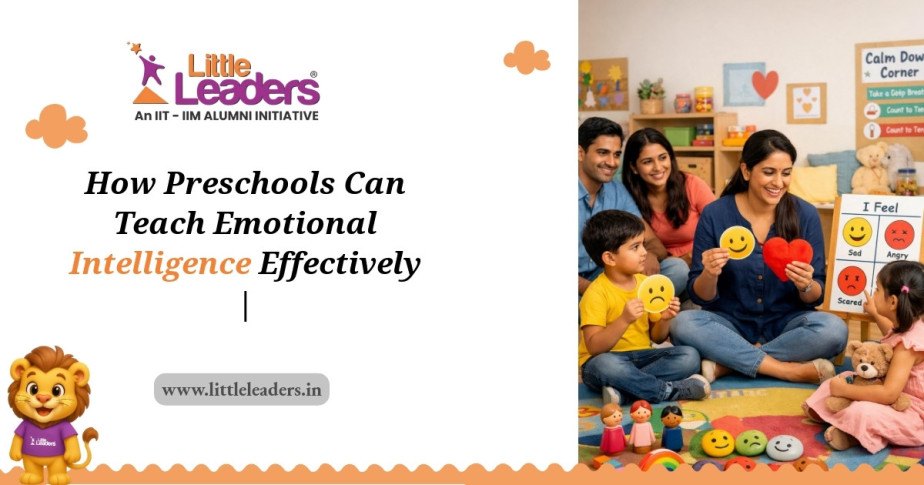
Imagine a classroom filled with the joyful chatter of young children, where learning is not just about ABCs and 123s but also about understanding feelings and emotions. This is the essence of how preschools can teach emotional intelligence effectively. In a world where interpersonal skills are as crucial as academic knowledge, nurturing emotional intelligence from a young age is invaluable. Children who develop emotional intelligence are better equipped to handle relationships, navigate social situations, and cope with challenges as they grow.
Many parents wonder how preschools can incorporate emotional learning into their curriculum amidst the hustle and bustle of daily activities. The curiosity often stems from a desire to see their children grow not only academically but also emotionally, developing empathy and resilience that will serve them throughout life. A parent of a four-year-old named Riya recently expressed her concern about Riyas difficulty in sharing toys with her peers. Riyas mother wanted to know how preschool could help her daughter learn to cooperate and understand the feelings of others.
In this guide, you will discover practical strategies and insights into how preschools can integrate emotional intelligence education seamlessly. From understanding the role of teachers to exploring age-appropriate activities, this article provides a comprehensive roadmap for parents eager to support their childrens emotional growth. You will learn about the importance of emotional vocabulary, the role of play in learning, and the significance of parental involvement in nurturing emotional intelligence.
Explore the key sections to understand how preschools can teach emotional intelligence effectively.
Emotional intelligence in early childhood involves the ability to identify, understand, and manage emotions. For young children, this means recognizing their feelings and those of others, which is foundational for developing empathy and social skills. At this stage, children are like sponges, absorbing the emotional cues from their environment. Teachers play a pivotal role in guiding them through this journey. Four-year-old Sam was often seen getting frustrated during group activities, unable to articulate his feelings. His teacher recognized this challenge and introduced simple emotion cards that helped him express himself more clearly.
Five-year-old Aanya, for instance, often felt overwhelmed in noisy environments. Her teacher noticed this and introduced her to quiet corner activities, helping Aanya label her feelings and find comfort in self-regulation. Such practices in preschool settings are instrumental in nurturing emotional awareness and self-control. By incorporating stories, role-playing, and discussions about feelings, preschools can create a nurturing environment where emotional intelligence is as much a part of the curriculum as literacy and numeracy. Parents can encourage this learning by asking their children about their feelings after school, reinforcing the language of emotions.
Teachers are at the forefront of emotional intelligence education. They not only impart academic knowledge but also model emotional regulation and empathy. By creating a safe and inclusive classroom atmosphere, teachers encourage children to express their emotions openly. A teacher can create a warm environment by greeting each child with a smile and asking about their day, which sets a positive tone for emotional sharing.
Seven-year-old Veer, who learns better when he can pace around the room, found a supportive teacher who allowed him to move freely during storytelling sessions. This approach helped Veer stay engaged and express his thoughts more effectively, demonstrating how flexibility in teaching styles can enhance emotional learning. Educators can use tools like emotion charts and interactive games to help children articulate their feelings. By acknowledging and validating these emotions, teachers help students build a strong emotional vocabulary, which is essential for effective communication. Teachers can also share their own feelings, showing children that it is okay to express emotions in a healthy way.
Preschools can implement a variety of activities to promote emotional intelligence. Storytelling, for instance, is a powerful tool for teaching empathy. When children hear about characters facing challenges, they learn to put themselves in others shoes and understand different perspectives. A story about a character who feels sad can lead to discussions about what makes children feel sad, helping them connect their own experiences with those of others.
Art projects also offer a creative outlet for expressing emotions. When children paint or draw, they often reveal their inner worlds, providing teachers with insights into their emotional states. Group activities, such as cooperative games, teach children the value of teamwork and empathy, reinforcing the importance of considering others feelings. A popular game called feelings charades encourages children to act out different emotions, allowing their peers to guess how they feel. Through these activities, children not only enjoy learning but also develop crucial life skills that will enable them to navigate social situations with ease.
A common mistake parents make is dismissing childrens feelings or labeling them as wrong. For example, when a child expresses anger or sadness, a parent might say do not feel that way or you should be happy. This can lead to children feeling misunderstood and less likely to express their emotions in the future. Instead, parents should validate their childs feelings by acknowledging them and encouraging open dialogue. A parent of a five-year-old named Maya learned this lesson after noticing that Maya became quiet whenever she felt upset. By practicing active listening and saying it is okay to feel sad, Maya began to open up about her emotions.
Another mistake is assuming that emotional intelligence will develop naturally without guidance. While children may learn some emotional skills through experience, intentional teaching can significantly enhance their understanding. Parents can support emotional learning by reading books that discuss feelings and encouraging discussions about characters and their emotions. This proactive approach helps children develop a robust emotional vocabulary and a deeper understanding of their feelings.
Understanding what to expect at different ages can help parents support their childrens emotional development effectively. At age three, children begin to recognize basic emotions like happiness and sadness. They may express these feelings but often lack the vocabulary to articulate them. Parents can help by labeling emotions during everyday situations and encouraging their children to express how they feel.
By age five, children typically start to understand more complex emotions such as frustration and disappointment. They also begin to empathize with others, recognizing when a friend is upset. Parents can foster this development by encouraging playdates and discussing feelings in various scenarios. By age seven, children usually have a better grasp of emotional regulation and can express their feelings more clearly. They are also more capable of understanding the emotions of others, making it an excellent time for parents to introduce discussions about empathy and conflict resolution.
While schools play a significant role in emotional education, parental involvement is equally important. Parents can support their childrens emotional growth by modeling empathy and discussing feelings at home. Simple activities, like sharing highs and lows of the day during dinner, can foster open communication and emotional awareness. A parent of a six-year-old named Arjun found that discussing their daily experiences helped Arjun articulate his feelings better and understand the emotions of others.
Parents can also collaborate with teachers to reinforce emotional lessons. By understanding the strategies used in preschool, parents can continue the conversation at home, ensuring a consistent approach to emotional learning. For instance, if a teacher introduces an emotion chart, parents can use similar charts at home to encourage discussions about feelings. Ultimately, a strong partnership between home and school creates a supportive environment where children feel valued and understood, enhancing their emotional intelligence development.
Consider a typical day for a preschooler, where emotional intelligence is interwoven into daily activities. In the morning, children gather for circle time, sharing their feelings while learning to listen to others. This simple ritual teaches them the importance of empathy and active listening. During this time, a child might say I feel happy today because I played with my best friend, prompting others to share similar experiences.
As the day progresses, children engage in role-playing games, where they practice conflict resolution and cooperation. Through these interactions, they learn to navigate social dynamics and develop a deeper understanding of their emotions. For example, during a role-play scenario about sharing toys, children can explore feelings of frustration and joy. By the end of the day, children participate in reflection time, discussing what they learned about emotions. This practice not only reinforces their understanding but also builds their confidence in expressing themselves. At home, parents can ask their children to recount their favorite moments from the day, reinforcing the lessons learned in preschool.
As children develop emotional intelligence, there are several signs of progress to observe. One significant indicator is the ability to articulate feelings more clearly. For example, a child who previously used only basic words like happy or sad may start to express more nuanced emotions like frustrated or excited. Parents can encourage this development by asking open-ended questions about their childs feelings and experiences.
Another sign is improved social interactions. Children who are developing emotional intelligence often show increased empathy and understanding towards their peers. They may offer comfort to a friend who is upset or demonstrate patience when playing games. Parents can observe these interactions during playdates and encourage discussions about how their child felt in those moments. Additionally, children may begin to use conflict resolution skills, such as negotiating with peers or using words to express their needs instead of resorting to tantrums. Recognizing these signs can help parents support their childs emotional growth effectively.
The benefits of teaching emotional intelligence extend far beyond preschool. Children who develop these skills early are better equipped to handle stress, build strong relationships, and succeed academically. Emotional intelligence lays the groundwork for resilience and adaptability, qualities that are increasingly important in todays world. A study found that children with high emotional intelligence are more likely to excel in school and have better mental health outcomes.
Research shows that children with high emotional intelligence tend to have better mental health and lower levels of anxiety. They are more likely to exhibit prosocial behavior, such as helping others and showing compassion, which contributes to a positive and inclusive community. By prioritizing emotional education, preschools prepare children for a lifetime of success and fulfillment. Parents can reinforce these benefits by celebrating their childs emotional achievements and encouraging them to express their feelings openly.
Despite its benefits, teaching emotional intelligence in preschool can present challenges. Some children may struggle with expressing their feelings, while others may find it difficult to understand abstract concepts like empathy. A child named Kiran often felt overwhelmed during group activities, leading to outbursts of frustration. His teacher implemented simple breathing exercises to help Kiran calm down and express his feelings more constructively.
To address these challenges, educators can use visual aids and hands-on activities that simplify complex emotions. For example, using puppets to demonstrate different feelings can make it easier for children to connect with their emotions. Consistent reinforcement and patience are key to helping children grasp these concepts. Teachers can also engage parents in workshops and discussions, providing them with tools to support their childrens emotional learning at home. By working together, educators and parents can overcome these obstacles, ensuring that all children benefit from emotional intelligence education.
Imagine a future where your child, equipped with emotional intelligence, navigates the world with confidence and empathy. Picture your child successfully resolving conflicts with friends, expressing their feelings clearly, and showing compassion to others. This is possible when preschools and parents join forces to prioritize emotional learning. As a next step, consider visiting LittleLeaders.in to explore more resources and support for your childs development.
Emotional intelligence is important in preschool because it helps children understand and manage their emotions, leading to better social interactions and academic success. Children who develop these skills early are more likely to navigate social situations effectively and build strong relationships as they grow.
Parents can support emotional learning by modeling empathy, discussing feelings openly, and reinforcing strategies used in preschool to create a consistent learning environment. Simple conversations about emotions during daily activities can help children articulate their feelings and understand the emotions of others.
Preschools can use activities like storytelling, art projects, and cooperative games to teach emotional intelligence, helping children develop empathy and social skills. Engaging children in role-playing scenarios can also provide practical experiences in understanding emotions and resolving conflicts.
Parents should seek extra support if they notice persistent difficulties in their childs ability to express emotions or if their child frequently experiences extreme emotional responses. Consulting with a child psychologist or counselor can provide valuable insights and strategies to support emotional growth.
Children who develop emotional intelligence tend to have better mental health, stronger relationships, and greater academic success. They are more resilient and adaptable, which equips them to handle challenges throughout their lives. Prioritizing emotional education in preschool lays the foundation for a fulfilling and successful future.