
Loading...
Loading...

Nullam dignissim, ante scelerisque the is euismod fermentum odio sem semper the is erat, a feugiat leo urna eget eros. Duis Aenean a imperdiet risus.




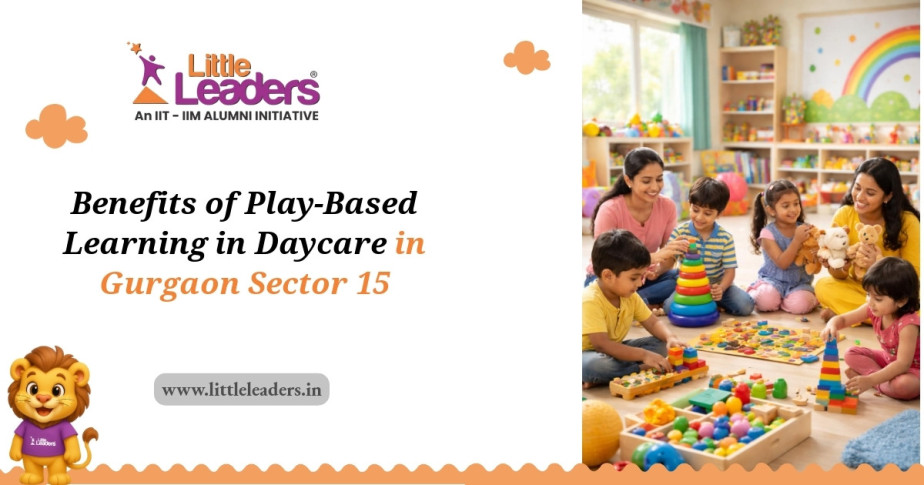
Many parents in Gurgaon Sector 15 believe that structured lessons are the only way to prepare their children for school success. But what if the real secret lies in play? Play-based learning in daycare is often misunderstood as just 'fun and games,' yet research and real-life experiences show itâs a powerful tool for early development. This approach taps into how young children naturally explore and make sense of the world around them. By engaging in play, children are not just having fun; they are laying the groundwork for essential skills that will serve them throughout their educational journey and beyond.
Imagine a lively daycare room where 3-year-old Aarav is building a tower with blocks, negotiating turns with friends, and experimenting with shapes and balance. These moments are not just playâtheyâre foundational learning experiences that boost cognitive, social, and emotional skills. By the time Aarav moves to kindergarten, heâs already developed critical thinking, communication, and collaboration abilities. For instance, when he struggles to balance his tower, he learns to problem-solve and think critically about how to make it more stable. This hands-on experience is invaluable and cannot be replicated through traditional learning methods.
This article will reveal what play-based learning really looks like in daycares around Gurgaon Sector 15, why itâs so effective, and how you can recognize its benefits for your child. Youâll walk away with practical insights to help you choose the right daycare and support your childâs growth through play. Understanding these concepts will empower you to make informed decisions that will positively impact your child's early development.
Play-based learning is an educational approach where children learn through engaging, hands-on activities that feel like play but are carefully designed to develop skills. Unlike traditional rote learning, this method encourages curiosity, creativity, and problem-solving. In Gurgaon Sector 15 daycares, this means children spend time exploring materials, interacting with peers, and making choices that build independence. For example, children might engage in a cooking activity where they measure ingredients, fostering both math skills and teamwork.
Research shows that play stimulates brain development by activating multiple areas simultaneously. For example, when children play pretend, they practice language skills, empathy, and executive function. This holistic development sets a strong foundation for lifelong learning and emotional resilience. A study published in the Journal of Early Childhood Research highlights that children who engage in play-based learning demonstrate higher levels of creativity and adaptability, traits that are essential in todayâs rapidly changing world.
One of the biggest benefits of play-based learning in daycare is how it nurtures social skills. Take 4-year-old Meera, who initially struggled with sharing. Through group play activities like role-playing a market or building a city with friends, she learned to negotiate, listen, and express her feelings. These social interactions are essential for emotional intelligence and self-regulation. For instance, during a role-play scenario, Meera had to decide how to share resources, which taught her empathy and cooperation.
Daycares in Gurgaon Sector 15 often create safe, supportive environments where children feel comfortable taking risks and making mistakes. This emotional safety encourages confidence and a positive attitude toward challenges, which are crucial traits for school and life. Educators often facilitate discussions after group activities to help children reflect on their experiences, further enhancing their emotional understanding and social skills.
Play-based learning is not just about fun; itâs a brain workout. When children engage in activities like puzzles, sorting games, or sensory play, they develop critical thinking and fine motor skills. For instance, 5-year-old Rohanâs fascination with building blocks helped him understand spatial relationships and basic math concepts without formal instruction. When Rohan builds a bridge with blocks, he learns about balance and gravity, concepts that are foundational in STEM education.
In Gurgaon Sector 15 daycares, educators observe childrenâs interests and tailor play experiences to extend learning naturally. This child-led approach keeps kids motivated and deepens understanding, unlike passive learning methods. For example, if a group of children shows interest in animals, educators might set up a mini-zoo with toys and books, encouraging exploration and discussion about different species, habitats, and conservation.
Not all daycares are created equal when it comes to play-based learning. Look for centers that emphasize exploration over worksheets and have trained staff who understand child development. Visit the daycare during playtime to see if children are actively engaged and if the environment is rich with diverse materials. A well-designed daycare will have areas for art, science, and dramatic play, allowing children to explore various interests.
Ask about how teachers balance free play with guided activities and how they support individual learning styles. A daycare that values play-based learning will communicate openly about its benefits and involve parents in the process. Additionally, check for parent testimonials or reviews on platforms like LittleLeaders.in, which can provide insights into the daycareâs approach and effectiveness.
Supporting your childâs play-based learning doesnât stop at daycare doors. Simple actions like setting aside time for unstructured play, providing open-ended toys, and joining in your childâs imaginative games can reinforce what they learn during the day. For example, when Aaravâs daycare introduced a gardening project, his parents started a small herb garden at home, extending his curiosity and responsibility. They involved him in the entire process, from planting seeds to watering the plants, which reinforced his learning and created a bonding experience.
Encourage questions and celebrate your childâs discoveries. This partnership between daycare and home creates a consistent learning environment that nurtures growth. You can also create themed playdates with other parents, where children can engage in various activities that promote learning through play, such as science experiments or art projects.
Play-based learning in daycare in Gurgaon Sector 15 opens doors to a joyful, effective way for your child to grow. By choosing a daycare that embraces this approach, youâre giving your child a head start in skills that matter far beyond the classroom. LittleLeaders.in offers resources to help you find and evaluate daycares that prioritize play and development. Take a moment today to visit a local daycare during playtimeâyou might just see your childâs future unfolding in blocks, stories, and laughter. Remember, the benefits of play-based learning extend to all aspects of your child's development, making it a crucial component of their early education.
Play-based learning encourages children to communicate, ask questions, and express ideas during interactive activities. This natural use of language in context helps build vocabulary and conversational skills effectively. For example, during a pretend play scenario, children might take on different roles, prompting them to use new words and phrases related to their characters, enhancing their language development.
Look for daycares with trained educators, a variety of play materials, and a balance of free and guided play. Observing childrenâs engagement and asking about the curriculum can help you assess the quality. Additionally, inquire about how the daycare incorporates feedback from parents and adapts its programs to meet the evolving needs of children.
Yes, play-based learning provides a low-pressure environment where shy children can build confidence through small group interactions and creative expression at their own pace. Activities like art projects or cooperative games allow them to engage without the fear of judgment, fostering their social skills and self-esteem.