
Loading...
Loading...





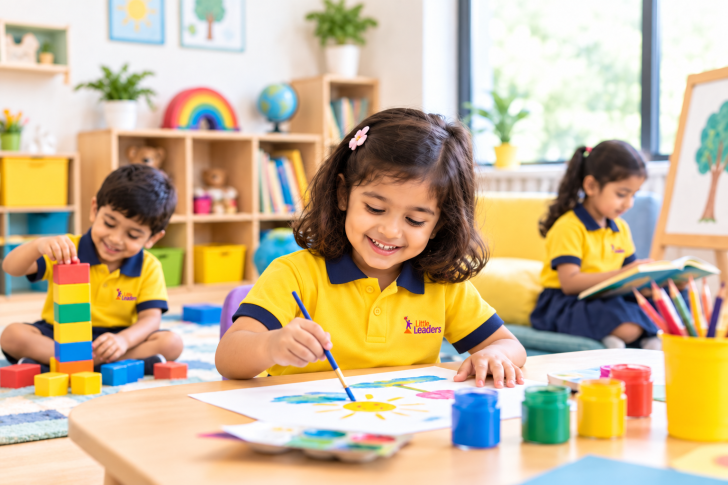
Emotional intelligence shapes how children understand feelings, build friendships, and handle setbacks. Many parents search for simple activities to build emotional intelligence in children that fit into daily routines. The good news is that you do not need special tools or extra time. Everyday moments, like mealtime, storytime, and playtime, already hold the right opportunities. This guide shares 10 practical emotional intelligence activities for kids you can start today, along with a look at why preschools like Little Leaders treat these skills as a core part of early learning.
Children cannot manage feelings they cannot name. Start by giving emotions simple labels like happy, sad, angry, or worried. Use picture cards, a feelings chart, or even your own expressions during the day to point these out. Over time, your child will use these words instead of acting out, which is one of the most important emotional intelligence activities for kids.
Stories give children a safe way to explore big emotions. Ask your child how a character might feel after losing a toy or making a new friend. Role play takes this further, letting kids act out situations like sharing a snack or apologizing after a disagreement. Both activities build emotional vocabulary and help children practise responses before they face real situations.
Sharing toys, snacks, or attention teaches patience and respect for others. Simple games with turns, like board games or passing a ball, show children that waiting is part of playing fairly. Praise your child when they share without being asked, since recognition strengthens the habit. This is a classic example of activities to build emotional intelligence in children that work through natural play.
Puzzles, building blocks, and simple strategy games teach children to think through challenges calmly. When a block tower falls or a puzzle piece does not fit, guide your child to try again instead of giving up. This builds patience and resilience, two traits closely linked to emotional intelligence. Little Leaders includes similar hands-on problem-solving activities in its classroom routines to support this growth.
Letting children choose between two shirts, two snacks, or two games gives them a sense of control. Small decisions build confidence and teach children that their opinions matter. This also reduces frustration, since children who feel heard are less likely to have outbursts. Keep choices simple and age appropriate so your child does not feel overwhelmed.
Empathy grows through small, repeated moments. If a sibling is upset, ask your child how they think that sibling feels and what might help. Pointing out emotions in books, shows, or real life situations builds this skill naturally. Little Leaders' curriculum uses discussion and reflection after group activities to help children connect their actions to how others feel.
Frustration is a normal part of childhood, but children need guidance to manage it well. Teach simple calming steps, such as taking three deep breaths or counting to five before reacting. Stay calm yourself, since children often mirror the adult reactions around them. Over time, these small habits become some of the most effective EI activities for preschoolers, helping children self-regulate instead of melting down.
Strong communication helps children express needs instead of acting them out. Ask open ended questions like "What happened?" or "How did that make you feel?" instead of yes or no questions. Give your child time to answer, even if it takes a moment. This patience builds trust and encourages children to keep talking about their feelings.
Play is not just fun, it is how young children learn best. Pretend play, group games, and even simple building activities teach cooperation, patience, and self-control without feeling like a lesson. According to child development research referenced by the American Academy of Pediatrics, play based learning supports social and emotional growth alongside academic skills. This is why most EI activities for preschoolers are built around games rather than worksheets.
A good preschool extends what parents start at home. At Little Leaders, teachers weave emotional learning into daily routines through group activities, storytelling circles, and guided play. Consistent reinforcement at school and home helps children apply emotional skills across different settings. This combined approach is part of why structured activities to build emotional intelligence in children work best when practised both at home and in the classroom.
Building emotional intelligence does not require a special curriculum or extra hours in the day. Small, consistent moments, like naming a feeling, taking turns, or talking through frustration, add up over time. Schools like Little Leaders support this work by reinforcing the same habits through daily classroom activities. With patience and practice, these simple emotional intelligence activities for kids can shape how your child handles relationships and challenges for years to come.
1. What are the early signs of healthy emotional development in young children?
Healthy emotional development often shows up as a child naming simple feelings, seeking comfort when upset, and showing interest in playing alongside other children.
2. At what age should children start understanding their feelings?
Children begin recognising basic emotions like happy and sad as toddlers, around age two to three, and build more nuanced understanding through the preschool years.
3. How can parents help a child who struggles to describe what they are feeling?
Use feelings charts, picture books, or simple questions like “Does your tummy feel funny?” to help children connect physical sensations with emotional words.
4. What should parents do when their child has frequent emotional outbursts?
Stay calm, name the emotion you see, and guide your child through a simple calming step like deep breathing, rather than reacting with frustration yourself.
5. What emotional skills help children adjust to preschool?
Skills like sharing, waiting for a turn, expressing needs with words, and managing separation from parents make the preschool transition smoother.
6. How can parents prepare a child emotionally before their first day of school?
Talk about what to expect, read books about starting school, and practise short separations beforehand so the first day feels familiar rather than sudden.
7. How can busy parents support a child’s emotional growth with limited time?
Use everyday moments like car rides or bath time to ask simple feeling based questions, since consistency matters more than long dedicated sessions.
8. What should parents look for in a preschool that supports whole-child development?
Look for a school that pairs academics with social and emotional learning, like Little Leaders, where group activities and guided play are part of the daily routine.