
Loading...
Loading...

Nullam dignissim, ante scelerisque the is euismod fermentum odio sem semper the is erat, a feugiat leo urna eget eros. Duis Aenean a imperdiet risus.




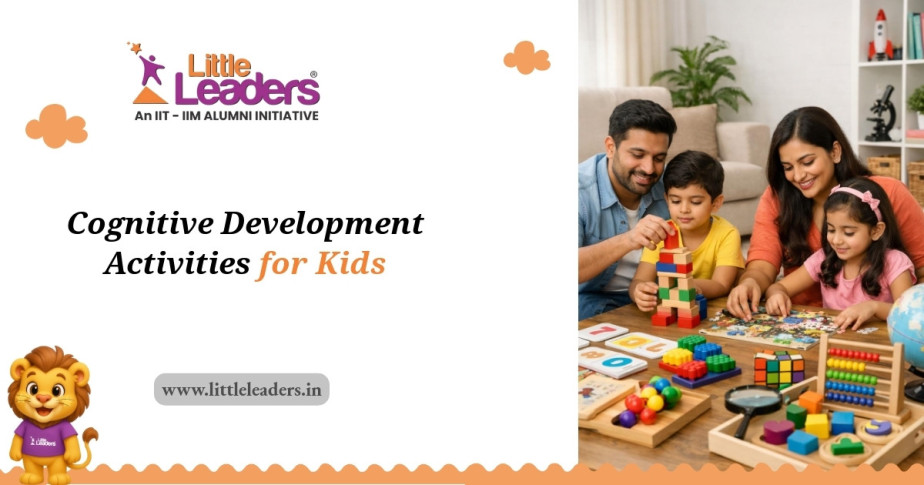
Picture this: a bustling playroom filled with laughter, colors, and the unmistakable sound of little minds at work. This is the magic of cognitive development activities for kids. These activities do not just keep your child entertained; they are the building blocks of their future, shaping how they think, solve problems, and interact with the world around them.
Parents often find themselves wondering how to best support the mental growth of their child. The curiosity is real, and the stakes feel high. After all, every parent wants to give their child the best start in life. Cognitive development activities for kids promise to open doors to creativity, problem-solving, and critical thinking.
In this guide, you will discover a wealth of activities designed to nurture the mind of your child. From simple games to structured learning sessions, these activities are tailored to meet the developmental needs of children at various stages. Get ready to dive into a world of learning that is as engaging as it is educational.
Explore the sections below to find activities that suit the age and interests of your child.
Cognitive development is the process by which children learn to think, understand, communicate, remember, imagine, and work out what might happen next. It is a critical aspect of childhood that sets the foundation for lifelong learning. By engaging in cognitive development activities, children enhance their ability to process information and apply knowledge in practical situations.
The journey of cognitive development begins at birth and continues into adulthood. During the early years, the brain is highly receptive to learning, making it an ideal time to introduce activities that challenge and stimulate the mind. Cognitive development activities for kids can include puzzles, memory games, storytelling, and imaginative play. Each of these activities targets different areas of the brain, helping to develop skills such as concentration, logical reasoning, and creativity.
For example, consider a four-year-old named Maya who loves to play with her building blocks. When she builds a tower, she not only learns about balance but also engages her imagination by creating a castle in her mind. This kind of play encourages her to think critically about how to make her structure stable, fostering problem-solving skills.
At this stage, toddlers are naturally curious and eager to explore their surroundings. Simple activities like sorting shapes, playing with building blocks, and engaging in pretend play can significantly enhance their cognitive development. For instance, two-year-old Aarav loves stacking blocks. As he carefully places one block on top of another, he learns about balance, coordination, and spatial awareness.
Puzzles are another excellent activity for toddlers. They encourage problem-solving and fine motor skills. Begin with puzzles that have large pieces and gradually introduce more complex ones as your child becomes more adept. Singing songs with actions and reading picture books also play a vital role in developing language skills and memory. These activities are not only educational but also fun, making learning an enjoyable experience for both you and your child.
To enhance the learning experience, parents can create a sensory bin filled with rice, beans, or sand, and hide various shapes or toys inside. This activity allows toddlers to explore different textures while searching for items, promoting their cognitive and sensory development.
One common mistake parents make is underestimating the power of play in cognitive development. Many parents feel pressured to introduce formal education too early, which can lead to frustration for both the child and the parent. Instead, focus on activities that are enjoyable and engaging. For example, if a child shows interest in animals, a parent can turn that interest into a learning opportunity by visiting a zoo or reading animal-themed books together.
Another mistake is not providing enough variety in activities. Children thrive on new experiences, and repeating the same activities can lead to boredom. Rotate toys and introduce new games regularly to keep the learning process fresh and exciting. For instance, if your child enjoys building blocks, consider introducing different types of construction sets or art supplies to foster creativity.
Understanding what to expect at various ages can help parents better support their childs cognitive development. At age three, children typically begin to engage in more complex imaginative play. They may start to understand the concept of sharing and can follow simple instructions, such as putting away toys. By age five, children often show a greater ability to focus on tasks, and they can engage in basic problem-solving activities, like figuring out how to complete a simple puzzle. At age seven, children become more adept at logical reasoning and can handle more complex tasks, such as multi-step instructions in cooking or crafting.
Parents can support their childs development by adjusting activities to match these developmental milestones. For instance, a three-year-old may enjoy sorting colors, while a five-year-old might benefit from simple board games that require taking turns and following rules.
As children grow, their cognitive abilities expand, and they become more capable of understanding complex concepts. Preschoolers benefit from activities that promote critical thinking and reasoning. Four-year-old Aanya, for example, enjoys playing memory games. These games help her improve concentration and recall, essential skills for her future academic endeavors.
Storytelling is another powerful tool for cognitive development. Encourage your child to create their own stories or narrate events from their day. This activity boosts imagination and enhances language skills. Additionally, introducing basic math games, such as counting objects or simple addition and subtraction, can lay the groundwork for more advanced mathematical concepts later on.
Parents can also introduce nature walks where children can collect leaves, rocks, or flowers. This not only encourages exploration but also provides opportunities for discussions about colors, shapes, and the environment, enhancing cognitive understanding through real-world experiences.
Children in this age group are ready to tackle more structured activities that challenge their cognitive abilities. Six-year-old Riya finds joy in solving jigsaw puzzles. These puzzles teach her patience and perseverance while also enhancing her problem-solving skills. Board games like chess or checkers are also excellent for developing strategic thinking and decision-making.
Encouraging your child to engage in creative arts, such as drawing or crafting, can further stimulate their cognitive development. These activities require planning, concentration, and creativity, all of which are crucial for cognitive growth. Science experiments and educational apps can also be introduced at this stage, offering interactive and engaging ways to learn complex concepts.
Consider setting up a weekly science experiment day where your child can explore simple concepts like mixing baking soda and vinegar to create a volcano. This hands-on activity not only teaches scientific principles but also encourages curiosity and experimentation.
In todays digital age, technology can play a significant role in cognitive development activities for kids. Educational apps and games designed for children can provide interactive and stimulating learning experiences. However, it is essential to balance screen time with traditional play to ensure well-rounded development.
For instance, educational apps that focus on math, language, and science can reinforce what your child learns in school. Interactive storybooks and virtual puzzles can also enhance reading and problem-solving skills. It is crucial to select age-appropriate content and set time limits to prevent overexposure to screens.
Parents can also look for online resources that offer virtual classes or workshops in subjects like art or coding, providing opportunities for children to learn new skills in an engaging format. This can help bridge the gap between traditional learning and modern technology.
As you engage your child in cognitive development activities, it is important to recognize the signs of progress. Look for your child becoming more curious and asking questions about the world around them. If your child starts to show improved concentration during activities, this is a positive indication of cognitive growth. Additionally, observe if your child is able to solve simple problems independently, such as figuring out a puzzle without assistance.
Another sign of progress is when your child begins to express their thoughts and ideas more clearly. This can be seen when they narrate stories or explain their thought process during activities. Celebrating these milestones can encourage further development and motivate your child to continue learning.
While most children develop cognitive skills at their own pace, there may be times when extra support is needed. If a child consistently struggles with basic tasks, such as following simple instructions or engaging in imaginative play, it may be beneficial to consult with a pediatrician or child psychologist. Early intervention can make a significant difference in a childs development.
Additionally, if a child shows signs of frustration or anxiety during learning activities, it may indicate that they are overwhelmed. In such cases, it is important to reassess the activities being offered and consider seeking guidance from educational professionals who can provide tailored strategies to support the childs growth.
Every parent has a unique journey when it comes to supporting the cognitive development of their child. Seven-year-old Veer, for example, learns best when he can move around. His mother, Priya, shares how she incorporates movement into learning by using dance and action songs. This approach has helped Veer improve his focus and retain information more effectively.
Another parent, Anjali, found that her five-year-old son, Arjun, enjoys cooking. She uses this interest to teach him about measurements and following instructions, turning a simple activity into a valuable learning experience. These stories highlight the importance of understanding the interests and learning styles of children to tailor activities that best suit their needs.
Implementing cognitive development activities for kids requires patience and creativity. Here are some tips to ensure success: Observe the interests of your child and tailor activities to match. This approach makes learning enjoyable and relevant. Set realistic goals and expectations. Celebrate small achievements to keep your child motivated. Be consistent, but flexible. Routine is important, but it is also essential to adapt to your childs changing interests and needs. Encourage curiosity and questions. Foster an environment where your child feels comfortable exploring and asking questions.
Cognitive development activities enhance critical thinking, problem-solving, and creativity. They help children process information and apply knowledge in practical situations, laying the foundation for lifelong learning. Engaging in these activities can also boost a childs confidence and social skills, as they learn to interact with others and share their ideas.
Integrate learning with play by choosing activities that align with the interests of your child. For example, use cooking to teach measurements or storytelling to enhance language skills. You can also turn everyday tasks, such as grocery shopping, into learning opportunities by asking your child to count items or identify colors.
While technology can be a valuable educational tool, excessive screen time can lead to negative effects. Balance technology use with traditional play and select age-appropriate content. It is important to engage with your child during screen time to discuss what they are learning and ensure a healthy relationship with technology.
Signs of progress include increased curiosity, improved concentration, and the ability to solve simple problems independently. If your child starts expressing their thoughts more clearly and engaging in imaginative play, this is an indication of cognitive growth. Regularly observing and celebrating these milestones can motivate your child to continue learning.
If your child consistently struggles with basic tasks or shows signs of frustration during learning activities, it may be beneficial to consult with a pediatrician or child psychologist. Early intervention can make a significant difference in a childs development, helping them overcome challenges and thrive.
As you embark on the journey of nurturing the cognitive development of your child, imagine a scene where your child confidently shares a story they created, filled with vivid characters and imaginative plots. You watch as their face lights up with excitement while explaining their ideas, showcasing their growth and creativity. With the right activities and a supportive environment, you can help your child unlock their full potential. For more resources and ideas, visit LittleLeaders.in.