Loading...
Loading...





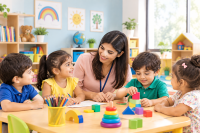
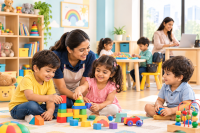
Imagine the scene: a vibrant classroom filled with the laughter and chatter of children. Brightly colored blocks are scattered across the floor, paintbrushes dance across large sheets of paper, and small hands eagerly dig into sensory bins filled with sand and water. This is not just play; it is a dynamic learning environment where preschoolers are thriving. Hands-on learning is at the core of this bustling activity, and it is transforming how young children grasp new concepts. The sounds of giggles and shouts of excitement fill the air as children discover new ways to interact with their surroundings.
Parents often find themselves wondering how to best support their child s early education. The curiosity surrounding hands-on learning is immense. How exactly does this approach help preschoolers learn faster? Many parents seek to understand the tangible benefits, hoping to give their children a head start in a world that values creativity and problem-solving skills. They want to know how they can foster an environment that promotes exploration and discovery.
In this blog, we will explore the profound impact of hands-on learning on young minds. You will discover practical insights into why this method is so effective and how you can incorporate it into your child s daily routine. By the end, you will have a clear understanding of how to harness the power of hands-on learning to enhance your child s educational journey. You will also find practical tips that can be integrated into everyday life.
Explore the following sections to uncover the benefits and methods of hands-on learning.
Research in child development has consistently shown that active learning, where children engage with materials and ideas in physical ways, significantly enhances cognitive development. This approach is rooted in the theory of experiential learning, which suggests that children learn best through experiences that involve active participation. When preschoolers manipulate objects, they are not just playing; they are forming neural connections that lay the groundwork for more complex thought processes. Studies indicate that hands-on activities help in developing fine motor skills, spatial awareness, and problem-solving abilities. These are foundational skills that support later academic success. For instance, when a four-year-old named Maya plays with building blocks, she is not only having fun but also learning about balance and gravity through trial and error.
Hands-on learning is not merely about keeping children occupied. It is a strategic approach that fosters critical thinking and creativity. When children engage in hands-on activities, they are encouraged to explore, experiment, and ask questions. This process helps them develop a deeper understanding of concepts rather than just memorizing facts. For example, when five-year-old Aanya refused her math worksheet last Tuesday, her father decided to use building blocks to teach her addition. As Aanya stacked the blocks and counted them, she began to understand addition in a tangible way. This method not only made learning fun but also ensured that the concept stuck with her. The satisfaction of seeing the blocks come together gave Aanya a sense of accomplishment that a worksheet could not provide.
One common mistake parents make is assuming that hands-on learning requires elaborate setups or expensive materials. In reality, many effective hands-on activities can be done with simple household items. For example, using empty containers and rice can create a sensory bin that helps children explore textures and practice scooping and pouring. Another mistake is not allowing enough time for exploration. Parents may feel the need to rush through activities, but allowing children to take their time fosters deeper learning. Encourage your child to play freely and ask questions, as this process is essential for their development. Observing their curiosity and allowing them to lead the activity can lead to unexpected learning moments.
Seven-year-old Veer learns better when he can pace around the room. His teacher noticed that traditional desk work did not engage him, so she introduced a learning station where Veer could move and interact with materials. This change resulted in a remarkable improvement in his reading comprehension. Veer began to enjoy stories and even started narrating them to his classmates. Such real-life examples illustrate the transformative power of hands-on learning. By catering to the natural inclinations of children, educators and parents can unlock a child s potential in ways that traditional methods may not. Another inspiring story involves six-year-old Tara, who was hesitant about science. After her parents set up a simple experiment at home using vinegar and baking soda, Tara was fascinated by the fizzing reaction. This hands-on experience sparked her interest in science, leading her to explore more experiments at home.
Understanding what to expect at different ages can help parents tailor hands-on learning experiences to their child s developmental stage. At age three, children are typically developing their fine motor skills and enjoy activities like coloring, stacking blocks, and simple art projects. By age five, children become more curious and can engage in more complex tasks, such as simple cooking or gardening. They may enjoy measuring ingredients or planting seeds and watching them grow. At age seven, children are ready for even more challenging hands-on activities, such as basic coding with educational games or building simple machines. By recognizing these developmental milestones, parents can provide appropriate hands-on learning opportunities that align with their child s interests and abilities.
Incorporating hands-on learning into your home environment does not require expensive materials or elaborate setups. Start with simple activities like cooking, where children can measure ingredients and observe chemical reactions. For instance, when baking cookies, children can pour flour, mix ingredients, and watch the dough transform in the oven. Art projects using everyday items like pasta or fabric scraps encourage creativity and fine motor skills. Gardening is another excellent hands-on activity that teaches children about nature, patience, and responsibility. Allow your child to plant seeds, water them, and observe how they grow over time. By integrating these activities into daily routines, parents can provide their children with enriching learning experiences that are both educational and fun. Consider setting up a dedicated art corner at home where children can freely express themselves through various materials.
As children engage in hands-on learning, there are several signs of progress that parents can watch for. One significant indicator is an increase in curiosity. If your child begins to ask more questions about the world around them or shows interest in trying new activities, it is a positive sign that they are learning. Additionally, improvements in fine motor skills, such as better control while using scissors or crayons, indicate progress. You may also notice your child becoming more confident in expressing their ideas and solutions during activities. Another sign is the ability to make connections between different concepts. For example, if your child relates a cooking activity to a science lesson about measurements, it shows that they are integrating their learning experiences.
Despite its benefits, hands-on learning is sometimes misunderstood. Some parents worry that it lacks structure or that children are not learning in a traditional sense. However, hands-on learning is highly structured in its own way. It requires planning and intention to ensure that activities align with educational goals. Another misconception is that hands-on learning is only suitable for young children. In reality, it is beneficial at all ages, as it adapts to the developmental stage of the child. By debunking these myths, parents can feel more confident in embracing hands-on learning as a valuable educational approach. It is important to recognize that hands-on learning is not a replacement for traditional methods but rather a complementary approach that enhances understanding.
As educational paradigms shift towards more holistic approaches, hands-on learning continues to gain recognition for its effectiveness. The future of education is likely to see a blend of technology and hands-on methods, providing children with diverse learning experiences. Schools and parents are beginning to understand that fostering creativity and critical thinking is just as important as academic achievement. By embracing hands-on learning, we prepare children for a future where these skills are indispensable. Imagine a future where your child approaches challenges with confidence and curiosity, thanks to the foundation laid by hands-on learning. The possibilities are endless when children are encouraged to explore and discover the world actively. As a parent, your next step is to look for opportunities to integrate hands-on learning into your child s routine. Whether it is through play, art, or science experiments, every experience is a chance to learn. Visit LittleLeaders.in for more resources and ideas to support your child s development.
Hands-on learning helps preschoolers develop critical skills such as problem-solving, creativity, and fine motor skills. It also enhances their cognitive development by allowing them to engage with materials and ideas actively. Children learn through exploration, which helps them retain information better than traditional methods. This active engagement promotes a love for learning and encourages children to ask questions and seek answers.
Start with simple activities like cooking, art projects, and gardening. These activities do not require expensive materials and can be integrated into daily routines to provide enriching learning experiences. For instance, cooking can involve measuring ingredients, while gardening can teach about nature and responsibility. Allow your child to lead the activities, encouraging their creativity and curiosity. You can also explore local parks or nature trails to enhance their learning experiences.
Yes, hands-on learning is beneficial for children of all ages. It adapts to the developmental stage of each child and continues to foster critical thinking and creativity throughout their education. Older children can engage in more complex projects, such as building models or conducting science experiments. These experiences can deepen their understanding of subjects and prepare them for future academic challenges.
Signs of progress include increased curiosity, improved fine motor skills, and enhanced confidence in expressing ideas. If your child begins to ask more questions or shows interest in new activities, it indicates that they are learning. Additionally, improvements in their ability to connect different concepts demonstrate their growing understanding. Observing these signs can help parents gauge their childs development and adjust learning activities accordingly.
Some easy hands-on activities for preschoolers include sensory bins filled with rice or beans, simple science experiments with vinegar and baking soda, and art projects using recycled materials. Cooking together can also be a fun and educational experience. These activities do not require elaborate setups and can be done with items commonly found at home. The key is to encourage exploration and creativity while providing guidance as needed.