Loading...
Loading...

Nullam dignissim, ante scelerisque the is euismod fermentum odio sem semper the is erat, a feugiat leo urna eget eros. Duis Aenean a imperdiet risus.




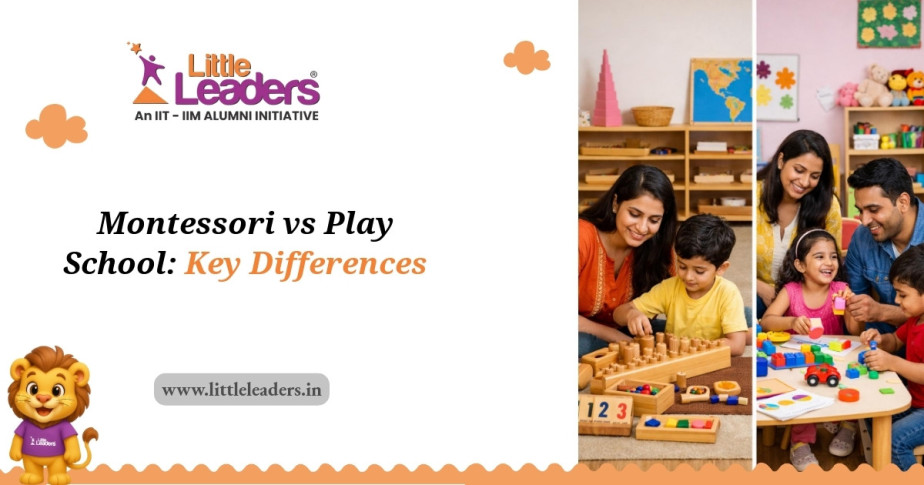
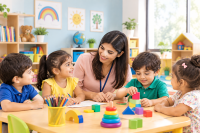
Imagine walking into a classroom where children are deeply engaged in a variety of activities. Some are carefully placing blocks in a specific order, others are quietly observing their peers, and a few are engrossed in a book that seems to have captivated their imaginations. This is a Montessori classroom, a place where learning is self-directed and the environment is meticulously prepared to nurture the curiosity of each child. Contrast this with a play school, where the atmosphere is lively, filled with the sounds of children playing, laughing, and interacting under the guidance of teachers who facilitate learning through play. The debate between Montessori and play school approaches to early childhood education is not just an academic one; it is a decision that many parents grapple with as they consider what is best for their child.
For parents embarking on the journey of choosing an educational path for their young ones, the question of Montessori versus play school often arises. Both methods have passionate advocates and offer unique benefits, but the key differences can often be a source of confusion. Parents frequently wonder which environment will best suit the needs of their child, foster their development, and prepare them for future educational success.
In this article, we will explore the fundamental differences between Montessori and play school approaches. By the end, you will have a clearer understanding of what each educational style offers, helping you make an informed decision that aligns with your parenting values and the needs of your child. We will delve into the philosophies, classroom environments, teaching methods, and developmental impacts of both Montessori and play school settings.
Explore the following sections to discover the key differences between Montessori and play schools.
The Montessori approach, developed by Dr. Maria Montessori, is built on the belief that children are naturally eager to learn and can initiate their own learning in a supportive, thoughtfully prepared environment. Montessori education emphasizes independence, respect for a childs natural psychological development, and the development of social skills. In a Montessori setting, children are free to choose their activities from a range of options, and they are encouraged to work at their own pace, fostering a sense of autonomy and intrinsic motivation. For instance, five year old Maya, who was shy and hesitant to engage, found her passion in sorting colored beads, which not only helped her learn about colors but also boosted her confidence as she mastered the task.
In contrast, play schools, which are sometimes referred to as preschools or nursery schools, focus on learning through play. This approach is rooted in the understanding that play is a critical component of healthy child development. Play schools provide structured play experiences that are designed to promote cognitive, social, and emotional growth. The play school philosophy centers around the idea that children learn best when they are actively engaged and having fun, which helps to develop a love of learning from an early age. For example, during a group storytelling session, children can create their own endings to stories, enhancing their creativity and social skills while having fun.
Montessori classrooms are distinctive in their organization and aesthetics. They are designed to be calm, orderly, and inviting, with a wide range of materials accessible to children. These materials are typically made of natural materials like wood and are carefully curated to support various aspects of learning. The environment is structured to promote independence, with child-sized furniture and tools that enable children to take ownership of their learning experiences. The classroom is often divided into different areas, each dedicated to a specific type of activity, such as practical life, sensorial, language, and mathematics. Imagine a serene space where the sound of soft music plays in the background, and children are focused on their tasks, creating a peaceful learning atmosphere.
On the other hand, play school environments are vibrant and dynamic. These classrooms are often filled with colorful toys, art supplies, and play structures that invite children to explore and create. The atmosphere is typically more informal, with group activities and free play being central components of the daily schedule. Play school classrooms are designed to be flexible and adaptable, allowing teachers to modify the setup based on the activities planned for the day, which often includes a mix of guided play and child-directed exploration. Picture a bright room where laughter fills the air as children build forts with cushions and engage in imaginative play, fostering creativity and social bonds.
In Montessori education, the role of a teacher, often referred to as a guide, is to observe and support the childs learning rather than directly instruct. Teachers in Montessori settings are trained to recognize the individual needs of each child and to facilitate their learning by providing appropriate materials and guidance. The teacher acts as a facilitator, creating a learning environment that encourages self-discipline and self-discovery. For example, when seven year old Liam struggled with a math concept, his teacher provided him with hands-on materials that allowed him to explore the concept at his own pace, leading to a breakthrough in understanding.
Conversely, in play schools, teachers take on a more direct instructional role. They plan and lead activities that are designed to engage children and promote learning through play. Teachers in play schools often focus on group activities that encourage social interaction and collaborative play. They play an active role in guiding childrens play experiences, helping them to develop social skills and providing support as needed to ensure that each child is included and engaged. A teacher might introduce a new game that requires teamwork, helping children learn how to communicate and work together effectively.
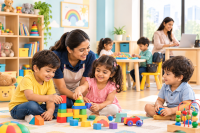
Montessori learning activities are highly individualized and are designed to support the development of specific skills. Children are encouraged to choose activities that interest them, and they are given the freedom to explore these activities at their own pace. The materials used in Montessori classrooms are designed to be self-correcting, allowing children to learn through trial and error and to develop problem-solving skills. For instance, when six year old Aisha struggled to stack blocks, she learned through practice and observation how to balance them correctly, fostering her critical thinking skills.
In play schools, the focus is on play-based learning activities that are often conducted in groups. These activities are designed to be fun and engaging, promoting learning through social interaction and imaginative play. Play schools often incorporate a variety of activities, such as storytelling, music, art, and drama, to stimulate different areas of development and to keep children engaged and motivated. Imagine a lively scene where children are painting together, sharing ideas, and expressing their creativity, all while developing fine motor skills and social connections.
One common mistake that parents make when choosing between Montessori and play school is assuming that one approach is universally better than the other. Each child is unique, and what works for one child may not work for another. It is essential for parents to observe their childs behavior and interests to make an informed choice. For example, if a child shows a strong inclination toward independence and self-directed activities, a Montessori environment may be more suitable. Conversely, if a child thrives in social situations and enjoys group activities, a play school may be the better option. Parents should also avoid rushing the decision and consider visiting both types of schools to see how their child responds to each environment.
As children engage in either Montessori or play school settings, parents should be attentive to signs of progress. In a Montessori environment, look for indicators such as increased independence, problem-solving skills, and a growing ability to focus on tasks for longer periods. Children may also demonstrate improved social skills as they learn to collaborate and share resources with peers. In a play school setting, parents should watch for enhanced communication skills, willingness to participate in group activities, and increased creativity during play. For instance, if a child begins to express ideas during group discussions or shows excitement about collaborative projects, these are positive signs of development. Regularly communicating with teachers can provide additional insights into a childs progress.
The impact of Montessori education on child development is well-documented. Studies have shown that children who attend Montessori schools tend to develop strong academic skills, as well as social and emotional competencies. The emphasis on independence and self-directed learning helps children to develop a strong sense of self-esteem and confidence in their abilities. For example, children in Montessori settings often display a greater ability to manage their time and make decisions, skills that are beneficial throughout their education and life.
Play schools also have a significant impact on child development. The play-based approach helps children to develop essential social skills, such as cooperation, communication, and conflict resolution. Play schools provide a supportive environment where children can explore their creativity and develop a love of learning that can last a lifetime. Through engaging activities, children learn to express their emotions and build friendships, laying a solid foundation for their future interactions.
When it comes to choosing between Montessori and play school for your child, it is important to consider your childs unique needs and learning style. Some children thrive in the structured, self-directed environment of a Montessori classroom, while others may benefit more from the social, play-based approach of a play school. It is also important to consider your own values and what you hope to achieve through your childs early education. Visiting schools and observing classes can provide valuable insights into how each environment aligns with your childs personality and interests.
Ultimately, both Montessori and play schools offer valuable learning experiences that can support your childs development. By understanding the key differences between these two approaches, you can make an informed decision that will provide the best foundation for your childs future success. Imagine a scene where your child, whether in a Montessori or play school, is excitedly sharing their achievements, whether it is mastering a new skill or creating a beautiful artwork. This is the essence of nurturing a love for learning.
The main difference lies in their educational philosophies. Montessori focuses on self-directed learning and independence, while play school emphasizes learning through structured play. Montessori environments prioritize individual exploration, while play schools encourage group interactions.
Both approaches support social development, but play schools often emphasize group activities and social interaction, which can enhance social skills. In play schools, children engage in cooperative play and learn to navigate social situations, while Montessori settings promote social skills through collaborative projects and shared learning experiences.
Consider your childs learning style, interests, and your educational values. Visiting schools and observing classes can also help you make an informed decision. Pay attention to how your child responds to different environments, as this can provide clues about which setting may be more suitable for their growth and development.
Most children begin Montessori or play school around the age of three. At this age, children are typically ready to explore new environments and engage with peers. However, some children may benefit from starting earlier or later, depending on their developmental readiness. It is important to assess your childs social skills, independence, and interest in learning when deciding the right time to enroll them.
Supporting your childs learning at home can be done in various ways. Encourage independent play and exploration by providing materials that stimulate creativity and critical thinking. Set aside time for activities that align with their interests, whether it is reading, arts and crafts, or outdoor play. Additionally, engage in conversations about their day at school, which can help reinforce their learning and show that you value their experiences.
As you consider these options, remember that the ultimate goal is to provide a supportive and enriching environment for your childs development. For more resources and guidance, visit LittleLeaders.in, where you can find additional insights and support for your parenting journey.