Loading...
Loading...

Nullam dignissim, ante scelerisque the is euismod fermentum odio sem semper the is erat, a feugiat leo urna eget eros. Duis Aenean a imperdiet risus.




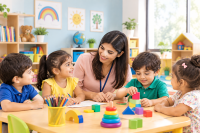
Imagine a classroom alive with the sounds of laughter, the clatter of building blocks, and the animated discussions of young minds at work. This is not chaos, but rather the vibrant hum of a play-based preschool education environment. The science behind play-based preschool education reveals that play is not just an activity but a critical component in the development of cognitive, social, and emotional skills in children.
For many parents, the question of whether play can truly be educational is a common one. The curiosity lies in understanding how unstructured activities can lead to structured learning outcomes. Parents often wonder if their child will be adequately prepared for the academic demands of future schooling if the focus remains on play during these formative years.
In this article, you will discover the profound impact of play-based learning on early childhood development. We will explore the science behind this educational approach, provide specific examples of its benefits, and offer practical insights into how you can support your childs learning journey through play.
Explore the sections below to understand the science and benefits of play-based preschool education.
Play is often seen as a simple pastime, but research shows it is a powerful tool for cognitive development in preschool-aged children. Through play, children engage in problem-solving, critical thinking, and creativity. For instance, when a child builds a tower with blocks, they are not just stacking objects; they are learning about balance, symmetry, and spatial relationships. This hands-on experience creates neural connections in the brain that are foundational for future learning.
Five-year-old Aanya, for example, loves playing with puzzles. Her father noticed how she carefully considers each pieces shape and color, experimenting with different combinations until she finds the right fit. This process enhances her problem-solving skills and encourages perseverance, laying the groundwork for more complex cognitive tasks in the future. Aanya often exclaims with joy when she completes a puzzle, and the sense of achievement boosts her confidence.
Experts agree that play-based activities stimulate brain development and foster a love for learning. By allowing children the freedom to explore and experiment, play-based preschool education supports the development of foundational skills that are essential for academic success. Parents can encourage this by providing various materials that stimulate creativity, such as art supplies, building blocks, and books.
One common mistake parents make is thinking that structured activities are more beneficial than unstructured play. While it is important to have some structure, overly scheduling a childs day can limit opportunities for spontaneous exploration. Children need time to engage in free play, where they can follow their interests and develop their imagination. To avoid this mistake, aim to balance structured activities with ample time for free play each day.
Another mistake is underestimating the educational value of play. Some parents may view play as mere entertainment rather than a vital learning process. Understanding that play is a natural way for children to learn can help parents appreciate its importance. To reinforce this, parents can observe their children during playtime, noting how they solve problems, negotiate with peers, and express their creativity.
Play is not only crucial for cognitive growth but also for social and emotional development. In a play-based preschool setting, children learn to communicate, collaborate, and resolve conflicts with their peers. These interactions build empathy and understanding, which are vital components of emotional intelligence. The social skills acquired during playtime are essential for a childs overall development.
Consider the experience of seven-year-old Veer, who thrives in group play settings. During a recent activity, he and his classmates were tasked with creating a story using puppets. Veer took on the role of the narrator, guiding the group through a fantastical adventure. This experience not only boosted his confidence but also taught him the value of teamwork and the importance of listening to others ideas. Veer learned to appreciate different perspectives, which is crucial for building healthy relationships.
Through play, children practice social skills in a safe and supportive environment. They learn to express their emotions, negotiate roles, and develop friendships, all of which contribute to their overall emotional well-being. Parents can support this development by encouraging their children to play with peers and providing opportunities for group activities.
Understanding what to expect at various ages can help parents support their childs development effectively. At age three, children engage in parallel play, where they play alongside peers but do not necessarily interact. They begin to develop social skills by observing others and may start to engage in simple cooperative play. Parents can foster this by arranging playdates and encouraging sharing.
By age five, children typically engage in more interactive play, forming friendships and enjoying cooperative games. They begin to understand rules and take turns, which enhances their social skills. Parents can support this by introducing board games that require taking turns and following rules, helping children learn patience and cooperation.
At age seven, children are often more adept at complex social interactions. They can negotiate roles in play and understand the importance of empathy. Parents can support their childs development by encouraging group activities, such as team sports or collaborative projects, which allow children to practice these skills in a structured setting.
Physical activity is an integral part of play-based learning, promoting both gross and fine motor skills. Activities such as climbing, running, and jumping help children develop strength, coordination, and balance. Fine motor skills are honed through activities like drawing, cutting, and manipulating small objects. These physical skills are crucial for a childs overall development and future academic success.
In a typical play-based preschool, you might find children engaged in a variety of physical activities, from obstacle courses to dance parties. These activities not only support physical development but also enhance cognitive function by increasing blood flow to the brain and improving concentration and memory. For example, during a dance party, children not only have fun but also engage in movement that can improve their motor skills and rhythm.
Moreover, physical play encourages healthy lifestyle habits that can last a lifetime. By incorporating movement into their daily routine, children learn the importance of physical fitness and develop a love for active play. Parents can reinforce this by participating in physical activities with their children, such as biking, hiking, or playing sports together.
Play-based learning is not just theoretical; it is a practical approach that can be observed in preschools around the world. One example is the use of thematic play centers, where children engage in role-playing activities that mimic real-life scenarios. These centers might include a grocery store, a doctors office, or a construction site, allowing children to explore different roles and responsibilities. This type of play encourages creativity and critical thinking.
For instance, in a preschool in Mumbai, children participate in a weekly market day. They take turns being shopkeepers and customers, using play money to buy and sell items. This activity not only teaches basic math skills but also fosters social interaction and language development. Children learn to communicate effectively, practice counting, and understand the concept of money, all while having fun.
By providing opportunities for imaginative play, educators can create a rich learning environment that supports a wide range of developmental goals. Parents can replicate this at home by setting up a play kitchen or a mini-market, encouraging their children to engage in similar role-playing activities.
Parents play a crucial role in supporting their childs play-based learning. By creating a stimulating environment at home, parents can reinforce the skills and concepts introduced in preschool. Simple activities like building with blocks, playing board games, or engaging in pretend play can have a significant impact on a childs development. Allowing children to lead their play can also promote independence and creativity.
Encourage your child to explore their interests through play. If they enjoy nature, consider setting up a small garden where they can plant seeds and observe the growth process. If they love music, provide instruments for them to experiment with different sounds and rhythms. Engaging in these activities together can strengthen your bond and enhance the learning experience.
By actively participating in your childs play, you can foster a strong bond and create a positive learning experience that extends beyond the classroom. This involvement not only supports learning but also shows your child that their interests are valued.
Despite its many benefits, some parents may have concerns about play-based education. A common worry is whether children will be ready for the academic demands of primary school. However, research shows that play-based learning provides a solid foundation for academic success by developing critical thinking, problem-solving, and social skills. Children who engage in play-based learning often excel in later academic settings.
Another concern is the perceived lack of structure in play-based programs. It is important to understand that while play-based learning may appear unstructured, it is carefully designed to meet specific developmental goals. Educators use a variety of strategies to guide play and ensure that children are learning key concepts. Parents can support this by communicating with educators and understanding the curriculum.
As children engage in play-based learning, parents should be aware of the signs of progress in their development. One sign is increased confidence in trying new activities. If a child is willing to attempt new games or projects, it indicates they are developing a growth mindset. Another sign is improved social interactions, such as making new friends or resolving conflicts independently.
Additionally, parents can look for advancements in problem-solving skills, such as a child finding creative solutions during playtime. If a child can articulate their thoughts and feelings more clearly, it shows growth in emotional intelligence. Regularly observing these signs can help parents understand their childs development and provide support where needed.
While play-based learning is beneficial for most children, some may require extra support. If a child consistently struggles with social interactions or exhibits significant delays in language development, it may be time to seek professional guidance. Early intervention can make a substantial difference in a childs development.
Parents should also consider seeking support if they notice persistent behavioral issues or if their child appears disengaged from play. Consulting with educators or child development specialists can provide valuable insights and resources. It is essential to address any concerns early to ensure that the child receives the necessary support for their growth and development.
Play-based learning focuses on child-led exploration and discovery, while traditional education often emphasizes structured lessons and rote memorization. In play-based settings, children learn through hands-on experiences that promote creativity and critical thinking. This approach allows for more individualized learning, catering to each childs unique interests and strengths.
Yes, play-based education equips children with essential skills such as problem-solving, collaboration, and emotional regulation, which are crucial for success in primary school and beyond. Research indicates that children who engage in play-based learning often perform better academically and socially in later years. They develop a love for learning that can last a lifetime.
Encourage open-ended play by providing a variety of materials and activities that spark your childs imagination. Participate in their play, ask open-ended questions, and create opportunities for them to explore their interests. Setting aside dedicated playtime each day can also help reinforce the importance of play in learning.
Play-based learning promotes cognitive, social, emotional, and physical development. It enhances problem-solving skills, fosters creativity, and builds social skills through interactions with peers. Children also learn to manage their emotions and develop resilience through play. Overall, this approach lays a solid foundation for lifelong learning and well-being.
Signs of thriving in a play-based learning environment include increased enthusiasm for learning, willingness to engage in new activities, and positive social interactions with peers. A child who expresses curiosity and creativity during play is likely benefiting from this approach. Regular communication with educators can also provide insights into your childs progress and development.
By embracing the science behind play-based preschool education, you can help your child develop a lifelong love of learning. Imagine a scene where your child, now a confident learner, eagerly shares their latest creative project with you, filled with excitement and pride. For more insights and resources, visit LittleLeaders.in.