Loading...
Loading...





Many parents in Noida believe that preschool education is all about structured lessons and sitting still. But what if the real magic happens when children are allowed to explore, imagine, and play? Play-based learning in preschools in Noida is transforming how young children develop essential skills, yet itâs often misunderstood as just âfun and games.â This misconception can lead parents to overlook the profound impact that play has on their child's development. In reality, play-based learning is a dynamic approach that fosters creativity, critical thinking, and collaboration among young learners.
Understanding the benefits of play-based learning in preschools in Noida means seeing how play is actually a powerful tool for cognitive, social, and emotional growth. This approach taps into a childâs natural curiosity and energy, making learning feel effortless and joyful. By the end of this read, youâll know exactly why play-based learning is a game-changer for your childâs early years and how it shapes their future success. With the right preschool environment, children can thrive and develop a lifelong love for learning.
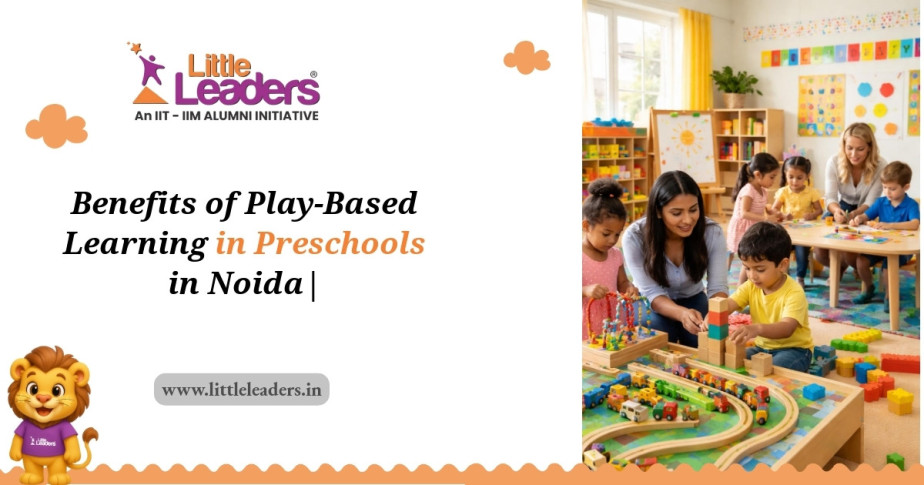
Imagine a classroom where children like Aarav, a lively 4-year-old, are not just sitting quietly but building towers with blocks, experimenting with colors, and role-playing as shopkeepers. In many Noida preschools, play-based learning means creating environments rich with materials and opportunities for hands-on discovery. Teachers guide rather than dictate, encouraging children to ask questions and solve problems through play. For instance, during a science-themed week, children might engage in a water play activity where they learn about buoyancy by testing different objects to see which float or sink.
This method contrasts sharply with traditional rote learning. Instead of memorizing alphabets or numbers in isolation, children learn these concepts naturally while engaged in meaningful activities. For example, Aarav might count the blocks he uses or recognize letters on a storybook during playtime. This contextual learning helps concepts stick better and builds a love for exploration. Moreover, preschools like Little Leaders in Noida incorporate storytelling sessions where children can act out their favorite tales, further enhancing their comprehension and retention of language.
Scientific studies show that play stimulates brain areas responsible for language, reasoning, and social skills. When your child plays, their brain forms new connections that support critical thinking and creativity. In Noida preschools embracing play-based learning, children develop fine motor skills by manipulating objects and gross motor skills through active movement. For instance, activities like clay modeling or finger painting not only enhance dexterity but also allow for creative expression.
Take Meera, age 3, who loves the sensory play corner filled with sand and water. As she scoops and pours, sheâs not just having fun; sheâs developing hand-eye coordination and learning cause and effect. These experiences lay the groundwork for later academic skills and emotional regulation, making play a vital part of early childhood education. Furthermore, preschools often integrate technology in play, using educational apps that promote interactive learning while keeping children engaged.
Play-based learning also nurtures social skills like sharing, cooperation, and empathy. In a Noida preschool setting, children often engage in group activities that require communication and teamwork. For instance, during a pretend market game, kids negotiate roles, take turns, and resolve conflicts, all while building friendships. These interactions are crucial as they teach children how to navigate social dynamics and develop emotional intelligence.
Parents often notice that children who attend play-based preschools are more confident and adaptable. This is because play allows children to express feelings and practice social interactions in a safe environment. When your child learns to navigate emotions and relationships early on, they gain resilience that benefits them throughout life. Activities such as group storytelling or collaborative art projects further enhance these skills, providing children with opportunities to express their thoughts and feelings in a supportive setting.
Not all preschools labeled as play-based offer the same quality experience. Look for schools in Noida that balance child-led play with skilled teacher involvement. A good play-based preschool provides diverse materials, safe spaces, and a curriculum that integrates play with learning goals. For example, Little Leaders emphasizes a holistic approach, ensuring that every activity aligns with developmental milestones while still being enjoyable for children.
Visiting schools and observing a session can reveal how children interact and how teachers support their learning. Ask about how the school measures progress without relying solely on tests. The right preschool will value your childâs individuality and encourage curiosity through play, setting a strong foundation for lifelong learning. Additionally, inquire about the types of play-based activities they offer, such as outdoor play, creative arts, or science experiments, to ensure a well-rounded experience.
Supporting play-based learning doesnât stop at preschool doors. You can extend this approach at home by providing open-ended toys like blocks, art supplies, and dress-up clothes. Encourage your child to explore and ask questions rather than focusing on correct answers. For instance, when your child builds a castle with blocks, ask about their story or what theyâre creating. This simple interaction boosts language skills and imagination. Also, set aside time for unstructured play daily, allowing your child to unwind and learn naturally. Your involvement and encouragement make a big difference in reinforcing the benefits of play-based learning in preschools in Noida.
Moreover, consider incorporating educational games and activities that align with your childâs interests. For example, if your child enjoys animals, you could create a scavenger hunt in your backyard or local park where they search for different animal figures or pictures. This not only promotes physical activity but also enhances observational skills and knowledge about wildlife.
Play-based learning encourages children to communicate, tell stories, and ask questions during activities, which naturally enhances vocabulary and language development. For instance, role-playing scenarios can introduce new words and phrases in a fun context.
Yes, reputable play-based preschools in Noida maintain strict safety standards and have trained teachers who actively supervise and guide children during play. This ensures a secure environment where children can explore freely.
Absolutely. Play-based learning builds foundational skills like problem-solving, social interaction, and self-regulation that ease the transition to structured school environments. Children who engage in play-based learning often adapt more easily to the demands of formal education.