Loading...
Loading...

Nullam dignissim, ante scelerisque the is euismod fermentum odio sem semper the is erat, a feugiat leo urna eget eros. Duis Aenean a imperdiet risus.



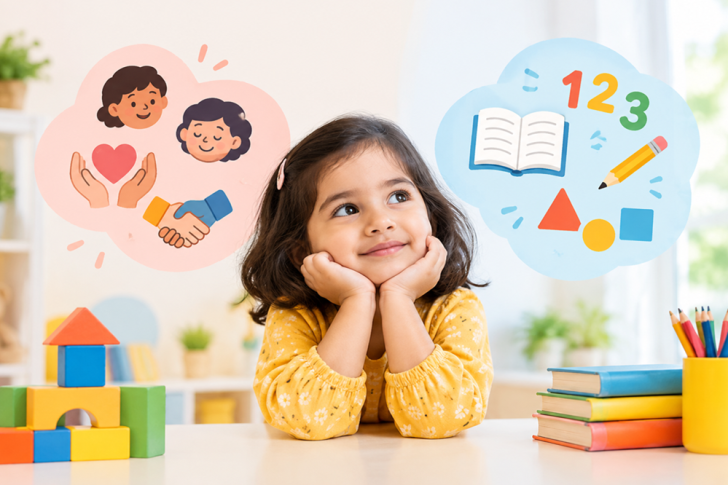
Parents often ask if their three or four year old should be learning letters and numbers before anything else. The truth is simpler than it sounds. Emotional intelligence and academic skills are not rivals. At Little Leaders, both grow together, because a child who feels safe and understood learns faster and remembers more.
Preschool is not a countdown to Class 1 exams. It is the stage where a child learns how to be a person in the world. Curiosity, patience, sharing, and self-control matter just as much as ABCs at this age. Little Leaders builds its programs around this idea, treating the early years as a foundation for life, not just for school admissions.
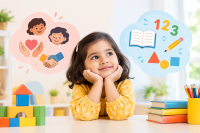
Academic readiness means a child can recognize shapes, colors, letters, or numbers. Emotional readiness means a child can sit through a lesson, ask for help, and handle small frustrations without falling apart. Both are needed for real learning to happen. A child who knows the alphabet but cannot sit still or manage disappointment will still struggle in a classroom. This is the heart of the emotional intelligence vs academics debate that many preschool parents face today.
These three skills matter more than an early head start on academics. A confident child raises their hand even if they might be wrong. A child who communicates well can explain what they need instead of getting upset. Independence means a child can put away toys, wash hands, or try a task before asking for help. Little Leaders' programs at the toddler, pre-nursery, and nursery stages are designed to build exactly these habits through daily routines and guided play.
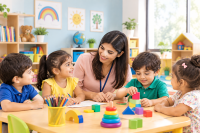
A child who feels safe takes more risks in learning. When a child is anxious or scared of making mistakes, their brain focuses on that stress instead of the lesson in front of them. Teachers at Little Leaders are trained to create warm, predictable classrooms where children feel noticed and cared for. This emotional security is what actually opens the door to better focus, memory, and curiosity.
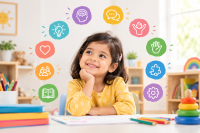
The two do not compete. They reinforce each other. A child who can name their feelings ("I feel frustrated because this puzzle is hard") is already using language and reasoning skills. A story time session builds vocabulary while also teaching empathy, since children learn to understand a character's feelings and choices. Little Leaders' reading and literacy activities are built on this exact idea, using storytelling to grow both comprehension and empathy at the same time.
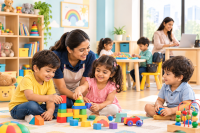
Holistic development means growing a child's mind, body, and heart together, not just their test scores. Little Leaders' curriculum is structured around seven dimensions, including physical and mental health, social and emotional intelligence, communication, critical thinking, and academic excellence. This is a good example of what holistic preschool education should include. A child who dances, builds with blocks, listens to a story, and plays a group game in the same week is developing multiple skills at once, not just one narrow academic track.
Choosing the right school is one of the biggest early decisions a parent makes. Here is what to check before shortlisting a preschool curriculum for your child.
Little Leaders welcomes parents to visit any of its centers across Delhi NCR, Noida, Gurgaon, Ghaziabad, and other cities to see this balance of academics and emotional growth in action. You can explore the full preschool curriculum on the Little Leaders website, or apply for admission directly if you are considering enrolling your child for the upcoming session.
Preschool learning works best when academics and emotional growth move hand in hand, not on separate tracks. A child who feels confident, communicates well, and manages emotions will pick up academic concepts faster and more happily than one pushed into early drilling. Little Leaders builds its programs on this understanding, giving children a foundation that supports both the classroom and life beyond it.
1. How can preschool activities build emotional intelligence in young children?
Storytelling, role play, group games, and art help children name and understand feelings. Little Leaders uses these daily activities to build empathy, patience, and self-awareness in young learners.
2. What role does play-based learning play in emotional and academic development?
Play-based learning lets children practice sharing, patience, and problem-solving while naturally picking up early literacy, numbers, and vocabulary, making it effective for emotional and academic growth together.
3. How can teachers support emotional development in a preschool classroom?
Teachers support emotional development by naming feelings aloud, staying calm during meltdowns, and praising effort over results. Little Leaders trains every teacher specifically for this gentle, consistent approach.
4. When should children begin developing early academic skills?
Early academic exposure, like recognizing letters or counting, can begin gently around age three. It should always pair with play and emotional support rather than formal, pressured drilling.
5. How can parents balance emotional development and academics at home?
Parents can read together, discuss feelings during daily routines, and celebrate small wins without pressure. This consistency at home reinforces what a strong preschool curriculum teaches in class.
6. What are the signs that a child is emotionally ready for school?
Signs include separating from parents without prolonged distress, following simple instructions, expressing needs in words, and showing genuine interest in playing and interacting with other children.
7. How can a preschool curriculum support both social-emotional and cognitive growth?
A strong curriculum blends storytelling, group activities, and structured lessons so children build vocabulary and reasoning alongside empathy. Little Leaders' seven-dimension curriculum is designed around this exact balance.
8. Why is holistic development important during the preschool years?
Holistic development helps a child grow in every area, including physical health, emotions, and academics, instead of excelling in only one. This balanced growth builds a stronger lifelong foundation.