Loading...
Loading...





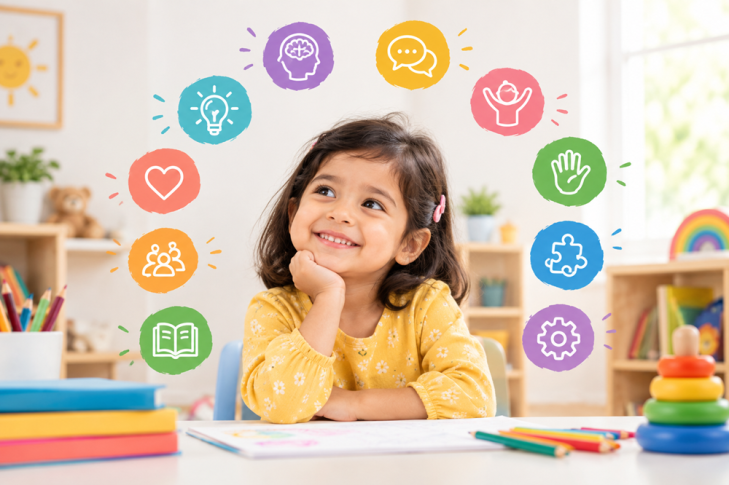
Every parent asks the same question before preschool starts. Is my child ready? Readiness is not just about knowing letters or numbers. It is about ten everyday skills that help a child settle in, make friends, and enjoy learning from day one. This checklist walks you through each skill, so you know exactly what to look for and how to help your child grow into a confident, happy preschooler.
Communication is often the first skill teachers look for. Can your child use simple words or short sentences to ask for help, share a feeling, or greet a friend? A preschool in Andheri East, Mumbai like Little Leaders builds daily conversation practice into circle time, storytelling, and free play, so children pick up new words naturally every single day.
Preschool is usually a child's first real group experience outside the family. Watch for signs that your child can play alongside other children, take turns, and show interest in what classmates are doing. At Little Leaders, small group activities in every playschool in Andheri East, Mumbai give children daily chances to practise sharing, waiting, and working together.
A preschool classroom runs on simple, repeated routines. Children who can follow a two-step instruction, such as pack your bag and line up, settle into the school day much faster. Little Leaders teachers use short, clear directions and repeat routines every day, so this skill builds gradually without pressure.
Self-help skills include washing hands, using the washroom, eating independently, and putting on shoes. These small daily wins build a child's confidence long before academics even begin. A good day care in Andheri East, Mumbai gives children the time and gentle guidance to practise these tasks every day, not just once a week.
Children, who can name their feelings, whether happy, upset, or nervous, tend to adjust to new environments more smoothly. Encourage your child at home to describe their day using simple feeling words like happy, sad, or angry. Little Leaders teachers are trained to notice these cues early and respond with warmth rather than correction.
Sitting through a short story or finishing a simple puzzle shows a child can focus for a few minutes at a stretch. This attention span grows gradually through play, not through drills or worksheets. Little Leaders structures classroom activities in short bursts that match a young child's natural attention span.
Fine motor skills, like holding a crayon or stacking blocks, support handwriting later on. Gross motor skills, like running, climbing, and balancing, support physical confidence and coordination. Little Leaders plans both indoor and outdoor activities every day, so children build these skills alongside academics rather than separately.
Independence means a child can manage small tasks without constant adult help, such as choosing a toy or cleaning up after play. Parents can build this habit at home by offering simple choices and letting children try things on their own first. Little Leaders encourages independence through activity corners where children pick their own tasks each day.
New places, new faces, and new routines can feel overwhelming for a young child at first. Adaptability is simply the ability to settle into change without too much distress. Gradual exposure, short trial visits, and a predictable daily schedule at Little Leaders help children adjust at their own comfortable pace.
A child who asks questions, explores objects, and enjoys trying new activities is already showing strong learning behaviour. Early childhood educators often note that curiosity predicts school success better than early academic skills alone. Little Leaders nurtures this curiosity through hands-on, play-based learning instead of rote memorisation.
Little Leaders follows an Emotional Intelligence-led curriculum that develops all ten of these skills alongside academics, not instead of them. Teachers pair every lesson, from counting numbers to nature walks, with a matching emotional or social goal, such as sharing, patience, or self-expression.
This combined approach is one reason parents searching for the best preschool in Andheri East, Mumbai choose Little Leaders for their child's first classroom. Many working parents also value the convenience, since a cowork in Andheri East, Mumbai sits close to the centre and lets them drop off their child before starting their own workday nearby. The result is a child who is ready for preschool socially, emotionally, and academically, not just on paper.
1. What are the most important skills a child should develop before starting preschool?
The most important skills are communication, social interaction, following instructions, self-help, emotional expression, concentration, motor skills, independence, adaptability, and curiosity, as covered in this checklist.
2. How can parents assess their child's preschool readiness?
Watch your child during everyday moments, playdates, mealtimes, and simple chores, to see how they communicate, manage tasks, and handle new situations without constant help.
3. Why are communication skills important for preschool readiness?
Communication lets a child express needs, ask questions, and connect with teachers and classmates, which reduces frustration and helps them settle into the classroom faster.
4. How do social skills help children adjust to preschool?
Social skills help children share, take turns, and build friendships, making group activities and classroom routines feel comfortable rather than stressful.
5. What self-help skills should a child have before starting preschool?
Basic self-help skills include washing hands, eating with some independence, using the washroom, and managing simple clothing items like shoes or jackets.
6. How can emotional expression support a child's transition to preschool?
When a child can name their feelings, teachers can respond quickly and appropriately, which shortens the settling-in period and reduces separation anxiety.
7. Why are independence and adaptability important for preschoolers?
Independence and adaptability help children handle new routines, teachers, and classmates with less stress, making the shift from home to school much smoother.
8. How does an Emotional Intelligence-led curriculum support overall preschool readiness?
It builds academic and emotional skills together, so children develop confidence, self-awareness, and social ability alongside early literacy and numeracy, exactly the approach Little Leaders follows.